HealthAgent
My nutrition and activity lived in different apps. I brought their Apple Health exports together so I could see the trends in one place.
Solo engineer. Ingestion through to the dashboard, auth and cloud deploy included.
Two apps, no shared view
I was tracking nutrition in MacroFactor and activity on my Apple Watch. Both sent data to Apple Health, though I still couldn’t compare the trends in the way I wanted.
Keep the raw exports
I keep the daily exports before normalising them, so the raw files are still there. Each user has an ingest token for writes, and the derived data stays with their authenticated account.
Runs locally or on GCP
A Fastify and Prisma API writes canonical Postgres tables. Cloud Run, GCS, Secret Manager, and Cloud Scheduler support daily processing, while local storage and sample data keep development practical.
The dashboard
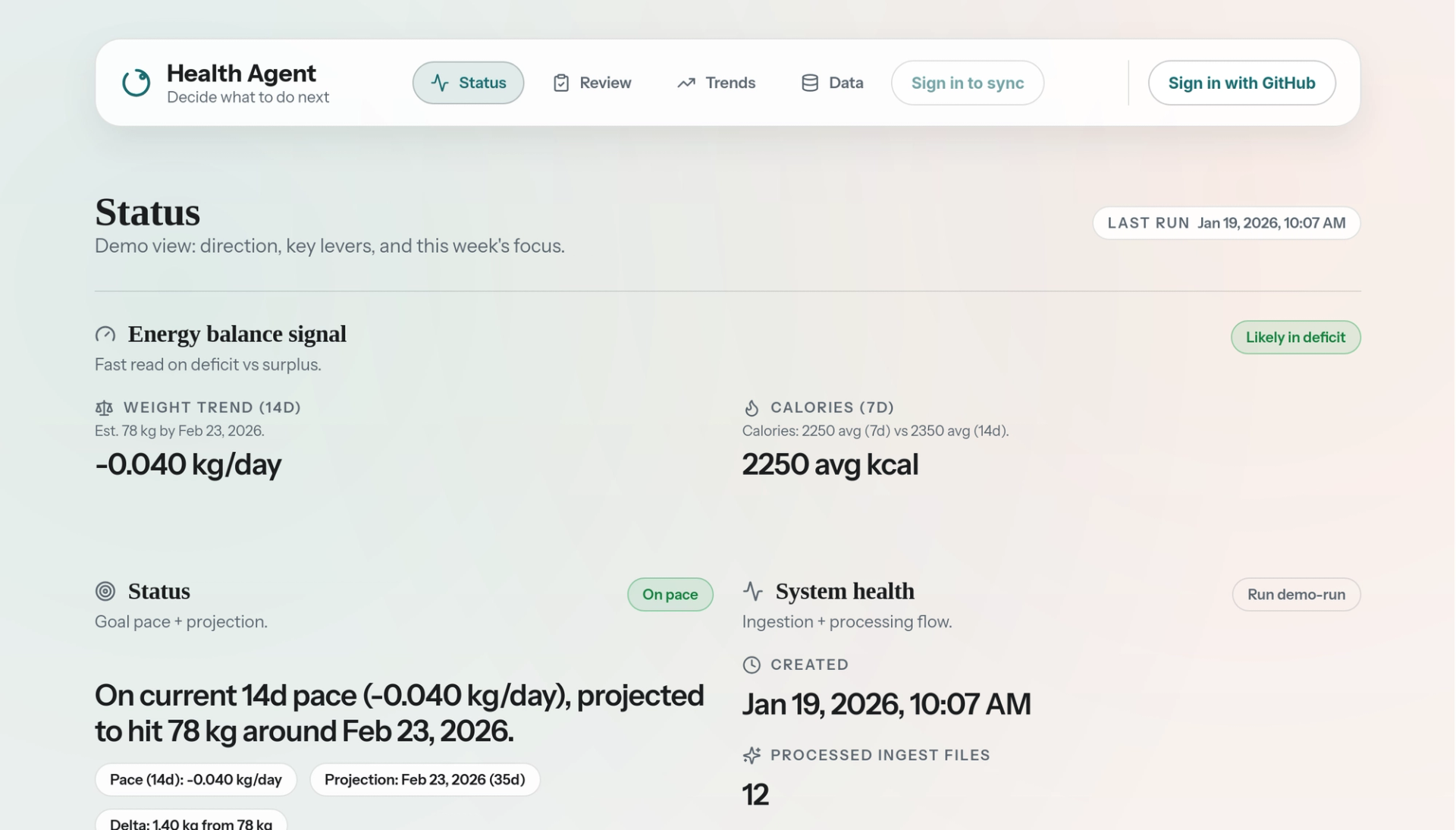
The Status view shows trends, projections and the files that have been processed. The model-generated insights are optional, so the ingestion and metrics keep working without them.
Limits
Nothing in this pipeline is clinically validated. The generated suggestions aren’t health advice.
Outcome
The ingestion and trend pipeline works from export to dashboard. Generated insights are optional, and they aren’t medical advice.