You Inc
I wanted one view of what I own, owe, earn and spend. I built You Inc around a ledger, then took the accounts and billing back out so people could run it on their own machine.
Solo product engineer responsible for product direction, data model, integrations, authentication, security, and delivery.
A ledger before a dashboard
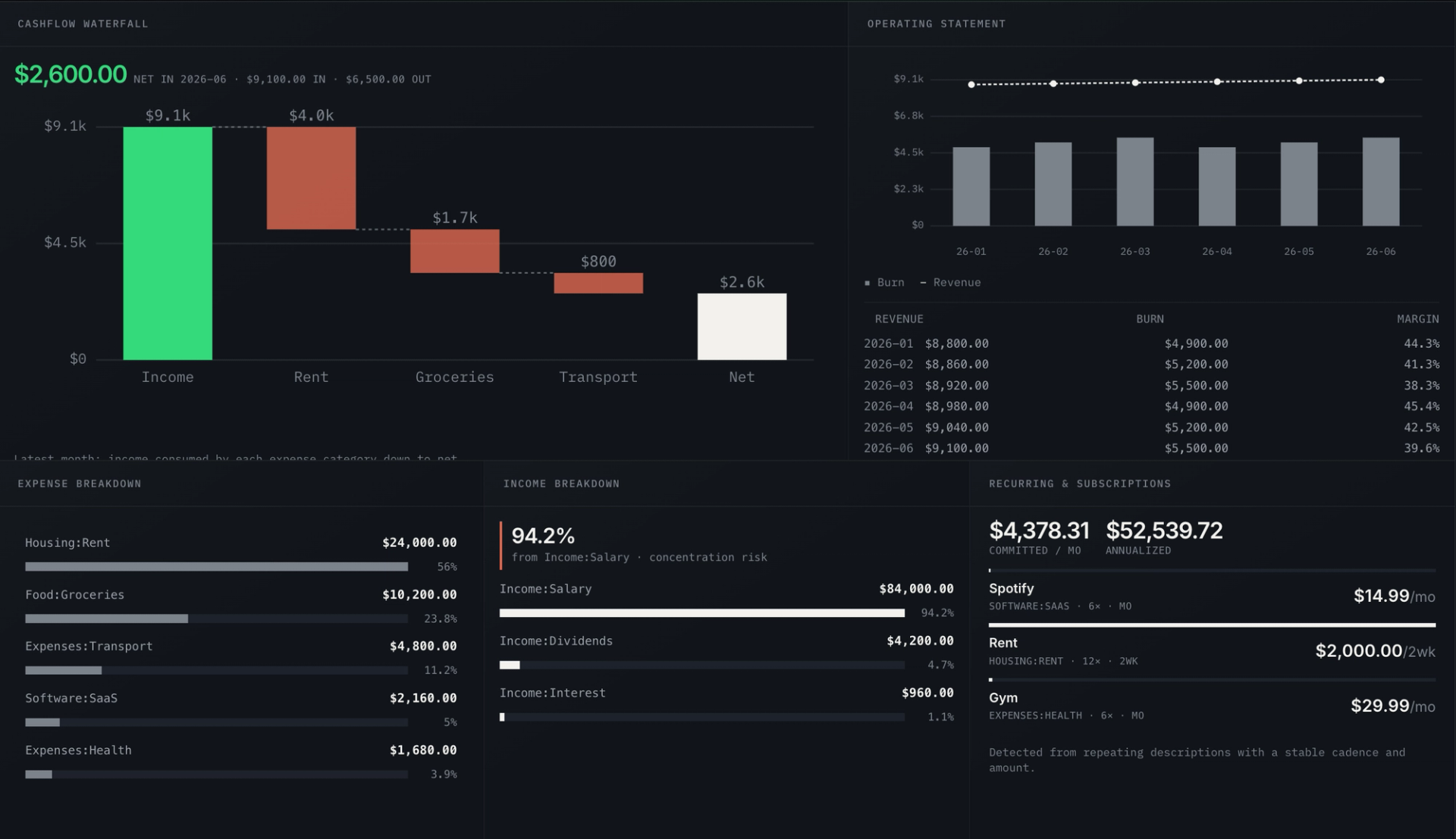
I wanted a coherent view of what I own, owe, earn and spend. That needed a real accounting model underneath. Synced transactions enter a double-entry ledger where every posting must balance; cashflow, net worth and runway are different views of the same data.
Make uncertainty visible
Rules route known transactions. Anything uncertain stays in suspense for review instead of quietly disappearing or being treated as a confident classification. Akahu bank sync feeds the ledger, with credentials encrypted in Supabase Vault and kept out of the browser.
Taking the SaaS layer out
The first version had accounts, paid plans and billing. But holding other people’s bank credentials brought an obligation that went well beyond building a useful finance tool. I removed the commercial layer and made You Inc self-hosted and MIT licensed. The person running it supplies their own database and Akahu credentials.
Where it stands
A working product you install rather than sign up for. youinc.net now serves a sample-data demo and the documentation; the software itself is on GitHub under MIT, and anyone running it points it at their own database and their own Akahu credentials.